Table of Contents
- Urban data: from problem to opportunity
- A Digital Twin to see the present and anticipate the future
- The dashboard: a city’s command center
- A long-term investment in data-driven governance
- More than just tech: a cultural shift
- Smarter, more livable, more human cities
Imagine a city that can describe itself in real time. A city that not only records what’s happening, but can understand and predict complex phenomena like traffic, pollution, or weather shifts—reacting with the same agility as a living organism.
This isn’t science fiction. It’s the core of a real project—funded by the European Union (NextGenerationEU) and the Italian Ministry of University and Research, as part of the PNRR – Italy Tomorrow plan—with Neodata as lead partner, alongside the National Center for High Performance Computing, Big Data and Quantum Computing (ICSC).
The goal: to build an urban platform based on a Digital Twin—a digital replica of the city that reflects its most critical dynamics, providing local administrations with the tools they need to act with awareness, speed, and, above all, foresight.
Urban data: from problem to opportunity
Modern cities are already filled with data. Every traffic light, weather sensor, air quality monitor or CCTV camera is constantly generating information. But just having data doesn’t automatically translate into meaningful action.
The real issue is that this data often lives in separate ecosystems. Traffic authorities see one part of the picture. Environmental agencies see it differently. No one has the full story.
What this leads to is siloed decision-making. And when decisions are made in isolation, responses to urban challenges tend to be fragmented, delayed, and often ineffective. We act after the problem occurs—a traffic jam, a spike in pollution, a storm—without knowing whether the response will actually solve anything.
This is where the Digital Twin comes in.
A Digital Twin to see the present and anticipate the future
The project developed by Neodata stems from a clear objective: transforming raw urban data into intelligent, actionable insight.
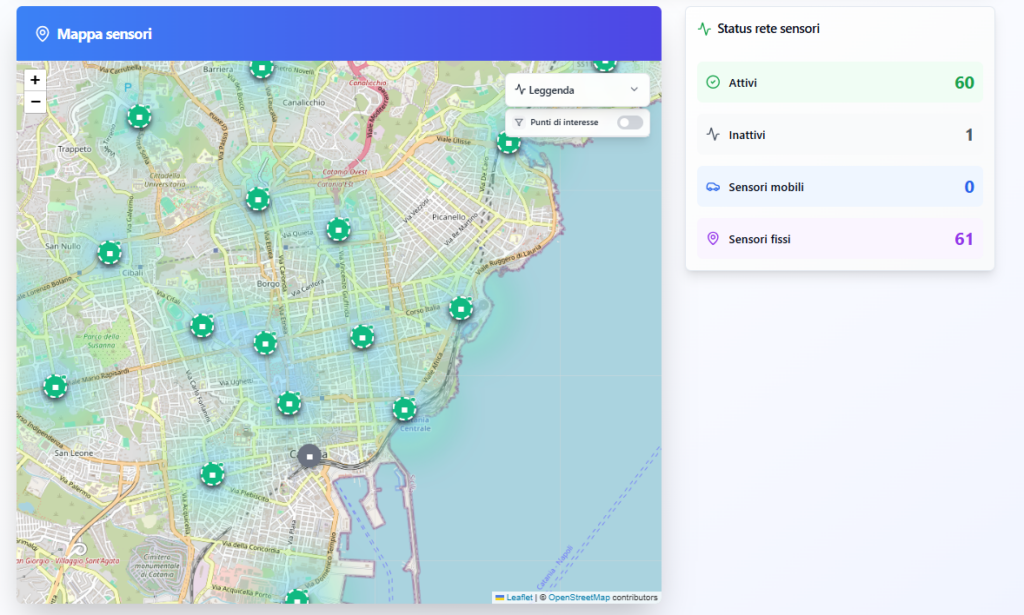
The platform collects data from multiple sources—physical sensors installed across the city, APIs from external providers like TomTom or Open‑Meteo, and open data shared by local governments—and brings it all together into a unified architecture: a modern data lakehouse designed to integrate, structure, and make this information easy to analyze.
But what really makes the difference is not just collecting data. It’s the ability to predict. Using artificial intelligence and machine learning models, the platform generates reliable forecasts up to 48 hours in advance—for example, showing how traffic is likely to evolve in a certain district, or where air quality might deteriorate next.
In short, the approach shifts from “see and react” to “know and prepare.”
The dashboard: a city’s command center
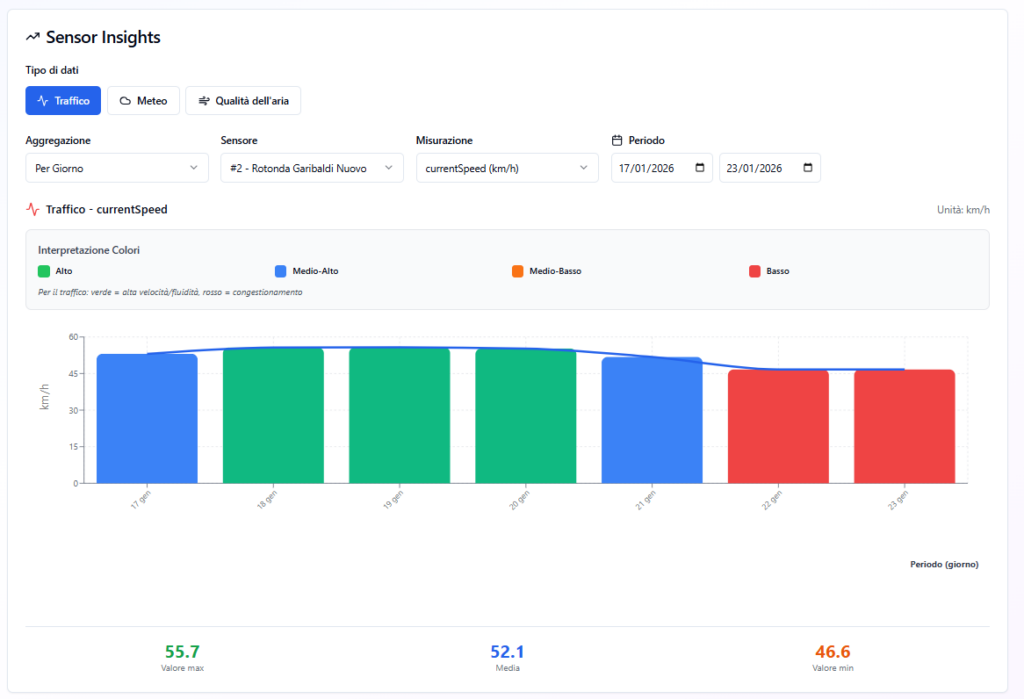
For all this technology to truly serve people, it needs to be simple and accessible. That’s why the platform is designed as a user-friendly dashboard, accessible via web or smartphone—tailored for city administrators, urban planners, and even engaged citizens.
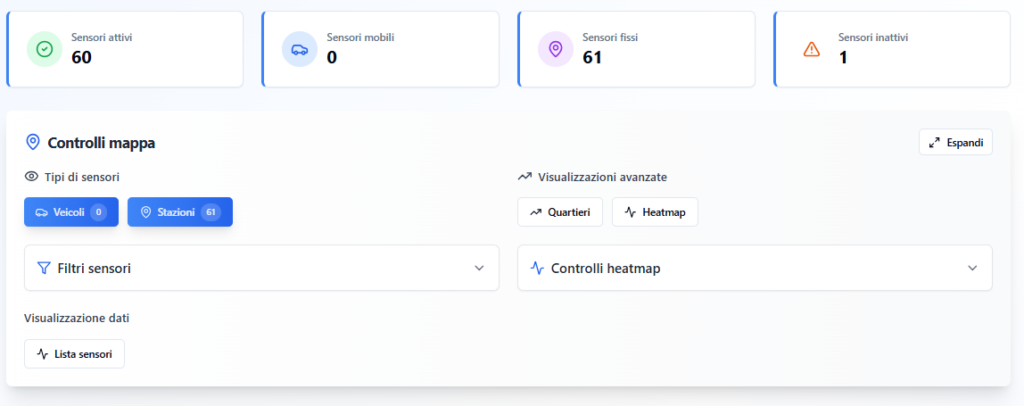
No technical expertise is required. The interface presents a real-time picture of what’s happening across the city: where traffic is building up, how weather conditions are changing, and where air quality is dropping.
But this is more than a snapshot of the present. Users can also explore future projections, compare current data with historical trends, and set up customized alerts. In this way, data becomes actionable: rerouting traffic before congestion hits, warning citizens about air quality issues, and preparing preventive measures.
A long-term investment in data-driven governance
One of the project’s strengths lies in its long-term vision. It’s not just about responding to emergencies, but about building a durable urban data heritage: a structured, validated historical archive that grows over time.
This kind of resource can serve multiple purposes in the future: from environmental or urban studies to training new AI models or shaping long-term infrastructure strategies. In other words, the city’s data becomes a valuable asset, one that doesn’t need to be recollected from scratch every time.
More than just tech: a cultural shift
At its core, this platform represents more than just technological innovation—it’s a cultural shift.
It’s about rethinking the relationship between data and decision-making, and putting knowledge at the center of how cities are managed.
With a Digital Twin, cities no longer wait for problems to emerge—they can predict them, understand them, and manage them in a coordinated, systemic, and transparent way.
Smarter, more livable, more human cities
Ultimately, the value of this technology isn’t measured in gigabytes or predictive models, but in quality of life:
- A commuter receiving an alert about a future traffic jam and choosing a better route
- A municipality preemptively limits vehicle access to reduce pollution peaks
- A citizen accessing reliable information about their neighborhood in real time
These are just a few examples of how AI and data integration can directly impact everyday life.
And this is precisely Neodata’s mission: to use technology not to replace human decision-making, but to amplify it—enhancing our ability to understand, choose, and act.